
Buying guide

Best kitchen layouts for Chester Victorian and Edwardian terraces

Most of the terraces we fit kitchens in across Hoole, Boughton, Handbridge, Newtown and Upton share the same basic footprint: a front reception, a middle room (often originally a parlour), a narrow rear room that became the kitchen when the outside toilet moved indoors, and a small yard or garden beyond. The kitchen tends to be 2.5–3.5m wide and 3–4m deep — tight by modern standards.

You have four realistic layout options, and the right one depends on how far you want to go with building work.

The four layout options, simplest to most ambitious:

  1. Single-run (galley-on-one-wall) — keep the existing kitchen footprint
  2. Galley (two opposite walls) — tightest use of a narrow Victorian rear room
  3. L-shape with broken-plan knock-through — open into the middle room
  4. Open-plan kitchen-diner after a rear extension — most common Chester terrace project today

Budget, planning constraints and how you actually use the space should drive the choice — not just what looks good on Instagram. Below is an honest take on each, based on Deelux fitting kitchens into Chester terraces since 2004.

Best kitchen layouts for Chester Victorian and Edwardian terraces

Layouts that keep the existing footprint (no building work)

If you’re not extending or knocking through, you’re working with the original Victorian or Edwardian rear room. The constraints are real — narrow width, a chimney breast on one wall, a door to the yard, sometimes an under-stair storage cupboard stealing a corner. But a good design can work with all of that.

Single-run (one-wall) kitchen

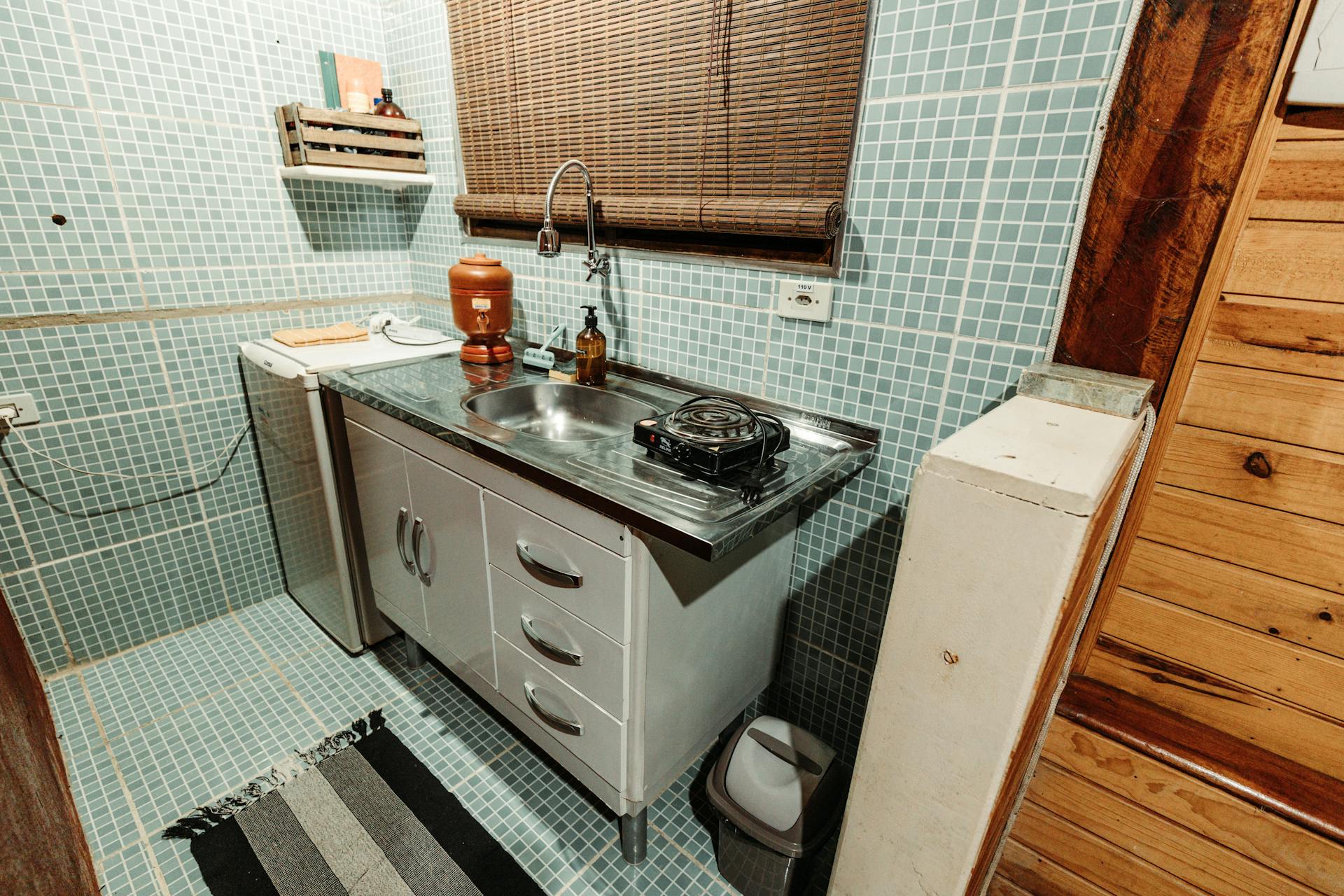
Everything on one wall — hob, sink, oven, tall units, fridge. Best for: rooms narrower than 2.5m, or where you want the opposite wall free for a dining table. Works well in Chester two-up-two-down terraces where the kitchen is also where you eat. Our Bowden (compact modern gloss) and Pollino (modern matt) ranges both work at this scale.

Galley (two-wall) kitchen

Units on both long walls with a walkway between. Best for: rooms wider than 2.7m. This layout moves the most efficient work-triangle setup into a Victorian footprint — sink and prep one side, cooking opposite. Gives more worktop than a single-run by a long way. Works well with handleless or slab-front ranges (Pollino True Handleless, Sensia) because the clean lines stop a narrow room feeling busy.

Design tricks that matter in Chester terraces:

  • Build around the chimney breast rather than removing it — a well-placed tall unit can hide the awkward angle
  • Pale matt or gloss finishes reflect the limited natural light from a single rear window
  • Full-height larder drawers store more than wall cupboards and don’t visually shrink the ceiling
  • Specify integrated extraction — Victorian rear rooms have limited ventilation
Layouts that keep the existing footprint (no building work)

Layouts that open the space up (knock-through or extension)

Most Chester terrace kitchen projects now involve either a knock-through to the middle room, a rear extension, or both. This is where you can build the open-plan kitchen-diner most people actually want — but it’s also where the planning, structural and timeline considerations we cover in our Cheshire West planning permission guide kick in.

L-shape with broken-plan knock-through

Remove the dividing wall (or create a wide opening) between the original kitchen and middle room. You now have a long L-shaped space — kitchen in the rear portion, dining in the middle portion, with the cabinets running L-shaped around the corner. Keeps some visual separation via a beam or half-wall.

  • Works well in: Hoole, Boughton, Handbridge terraces where the middle room is rarely used
  • Structural work: needed (the dividing wall is usually load-bearing — requires steel beam and structural engineer)
  • Planning: usually not required unless in a listed property
  • Good range fit: Mollingdon (painted Shaker), Brackenbury (oak and painted mix)

Full open-plan kitchen-diner with rear extension

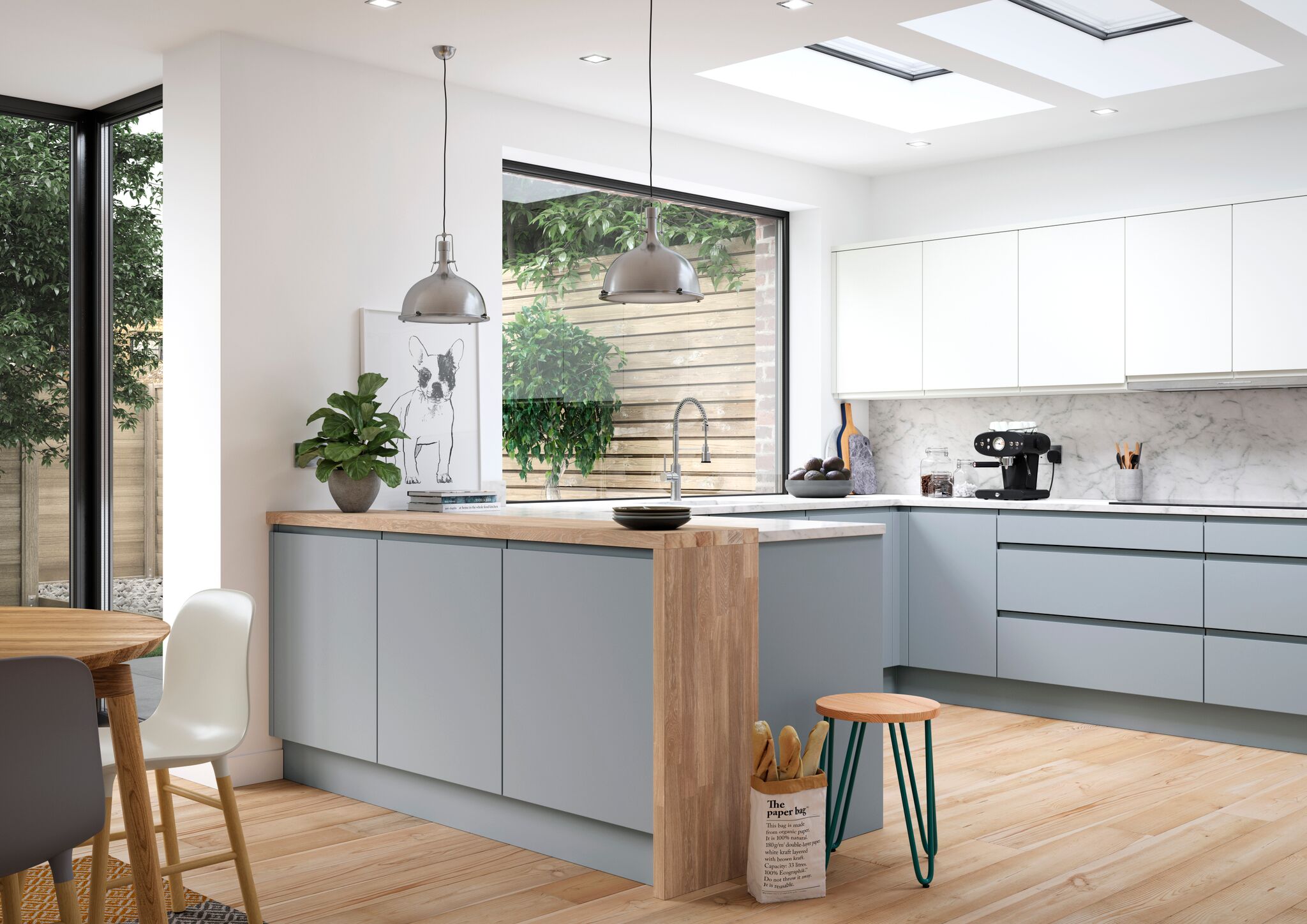
A single-storey rear extension makes the original kitchen into a utility or boot room and puts the new kitchen in the extended space — typically with bifold or sliding doors to the garden, a lantern rooflight, and a central island.

  • Works well in: longer terraces and semis with deeper gardens, common in Upton, Vicars Cross and Christleton
  • Structural work: extension + internal reconfiguration, roof, glazing, heating
  • Planning: often permitted development, but check first — see our Cheshire West planning guide
  • Good range fit: all Deelux ranges — this layout gives you the widest choice
  • Island size: 1.8–2.4m is typical in a Chester terrace extension — any bigger and the walkways pinch

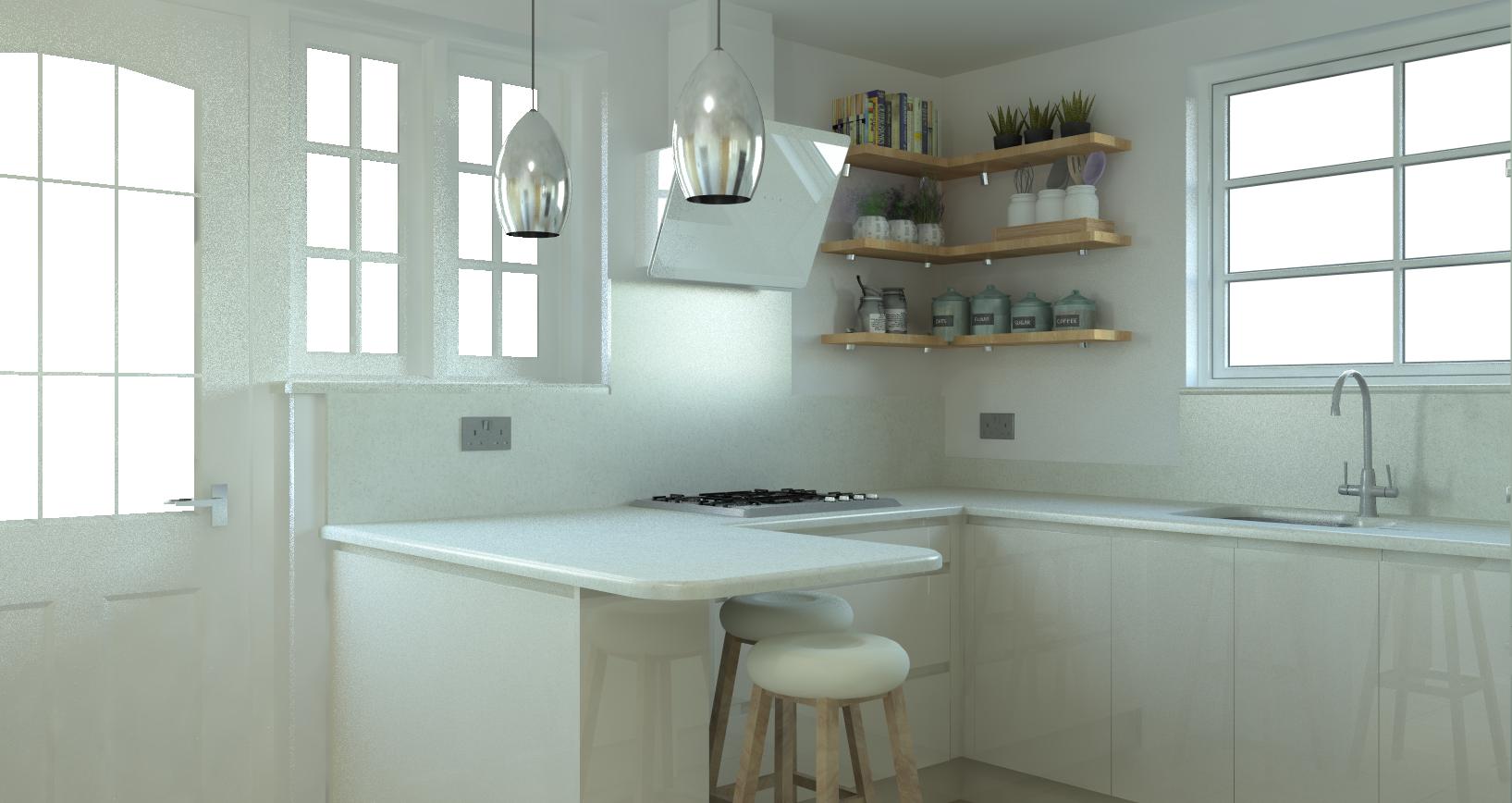
One honest note: an island isn’t always the right answer. If your total kitchen footprint is under about 16m², a peninsula or a long run with a separate dining table often works better. We’ll tell you which suits your space at the design visit.

Layouts that open the space up (knock-through or extension)

Frequently asked questions

What’s the best kitchen layout for a Chester Victorian terrace?

If you’re not extending: a two-wall galley layout uses a narrow rear room most efficiently. If you are extending: an open-plan L-shape with an island is the most popular and flexible layout for a Chester terrace extension.

How wide does a Chester terrace kitchen need to be for an island?

At least 3.5–4m wide (internal) to give 900–1000mm walkways on both sides of an island. Anything tighter feels pinched. A peninsula is usually a better fit below that.

Can I remove the chimney breast in a Chester terrace kitchen?

Yes, but it’s a structural job requiring a structural engineer, building regulations approval and usually a steel support beam. If the house is listed or in a conservation area with extra protections, consent may also be needed — see our Chester conservation areas guide.

Which Deelux range works best in a narrow Chester kitchen?

For modern tight footprints, the Pollino True Handleless and Sensia ranges work beautifully — handleless fronts make narrow spaces feel calmer. For traditional Victorian homes, Mollingdon (painted Shaker) strikes the right tone without overwhelming a small room.

Do I need to move the back door to get a good kitchen layout?

Often yes. The original rear door in a Chester terrace is usually in the worst possible place for modern cabinet runs. Relocating it (or replacing it with bifold/sliding glass in an extension) usually unlocks a much better layout.

Wide Range of Styles
Get the style that is right for you

Whether you are looking for a modern look or something more traditional, at Deelux we tailor the kitchen to suit your needs and can find the style that's right for you. Check out some of the styles on our website and if you have any queries or want to talk to someone about your designs please get in touch.

Chat with us