Buying guide

Designing a kitchen for a 1930s Warrington semi

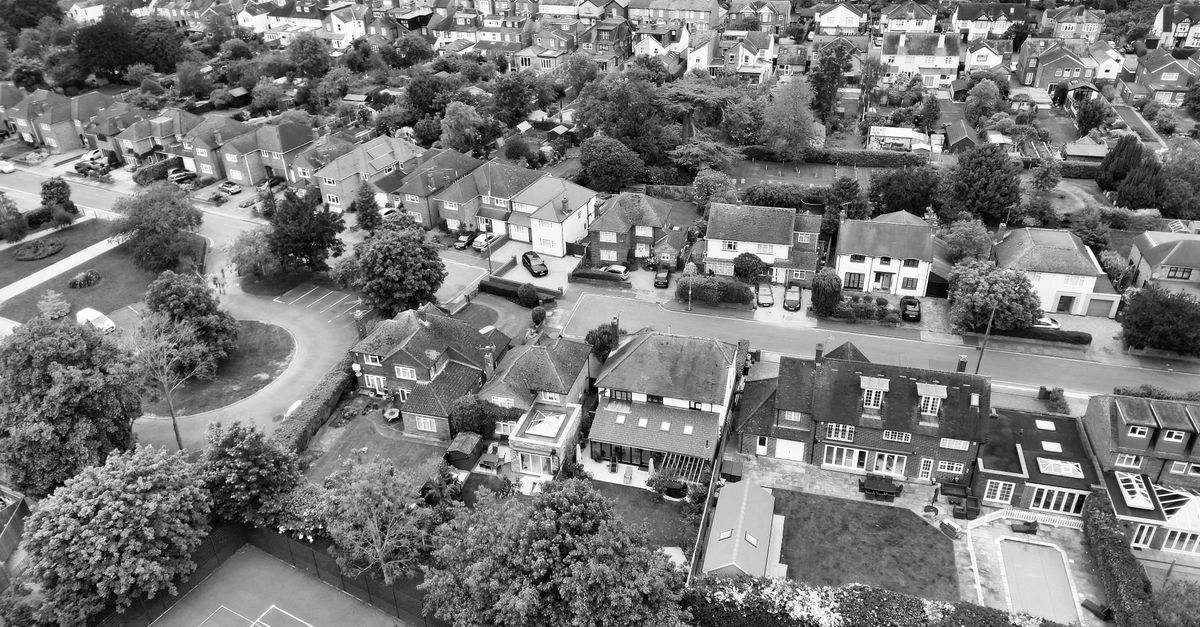
Warrington’s 1930s housing stock is enormous — Appleton, Grappenhall, Stockton Heath, Latchford, Orford, Fearnhead, Padgate, Woolston, Westbrook — whole neighbourhoods of bay-fronted semis built between the wars, most still broadly to their original plan. They’re a brilliant starting point for a kitchen. But they come with period-specific considerations a new-build designer won’t think about.

What matters most when designing a kitchen for a 1930s Warrington semi:

  • Solid walls — no cavity, different fixings needed, can’t hang units the way modern homes do
  • Chimney breasts in both reception rooms and often the original kitchen
  • Uneven floors — 15–20mm settlement across a 3m run is common
  • Low-ish ceilings in the original kitchen (often lower than the reception rooms, typically 2.3–2.5m)
  • Original features worth preserving — picture rails, coving, quarry-tile floors in the kitchen, original doors and architraves
  • Door and window positions that don’t suit modern cabinet runs

A good designer works with these, not against. Below, what actually matters in practice, and which Deelux ranges sit comfortably in a 1930s Warrington semi.

Designing a kitchen for a 1930s Warrington semi

Working with the building — what 1930s semis actually need

Solid walls and how we fix to them

Pre-war Warrington semis have solid brick walls — no cavity. Modern wall units are designed for cavity plasterboard with expanding plugs; in solid brick you need longer fixings direct into the masonry, and sometimes a subframe or ledger rail if the brickwork is uneven. Our in-house fitters carry the right fixings for every 1930s scenario; if we can’t get a secure fix in a particular spot, we redesign the layout rather than hope.

Uneven floors and settlement

A 15–20mm drop across 3m is common in a 1930s Warrington semi. Modern cabinets level with adjustable legs (up to 30mm typically). Bigger discrepancies need packing, scribe-cut plinths, and sometimes floor prep before installation. We assess this at the free home survey — it’s never a surprise we pass on at fit stage.

Chimney breasts — keep them

The original kitchen chimney breast housed a coal range and back boiler. It’s tempting to remove it for more floor space, but it’s expensive (structural engineer, steel beam, Building Regulations) and you lose the room’s character. Better designs absorb it: tall larders flanking it, a range cooker in the recess where the original range sat, or open shelving in the alcoves.

Original features worth keeping

  • Picture rails — pull wall units down slightly so the rail remains visible
  • Quarry-tile floors in the kitchen — often restorable; worth protecting during the fit
  • Original doors and architraves — painted cabinetry in a sympathetic colour reads better next to original joinery than high-gloss modern fronts
  • Sash or Crittall windows (common in 1930s semis) — don’t replace to suit units; design units around them

Low ceilings in the original kitchen

Many 1930s semi kitchens have lower ceilings than the rest of the house — 2.3–2.5m is typical, versus 2.5–2.7m in the reception rooms. Tall larders may need bespoke heights. We check at survey and adjust.
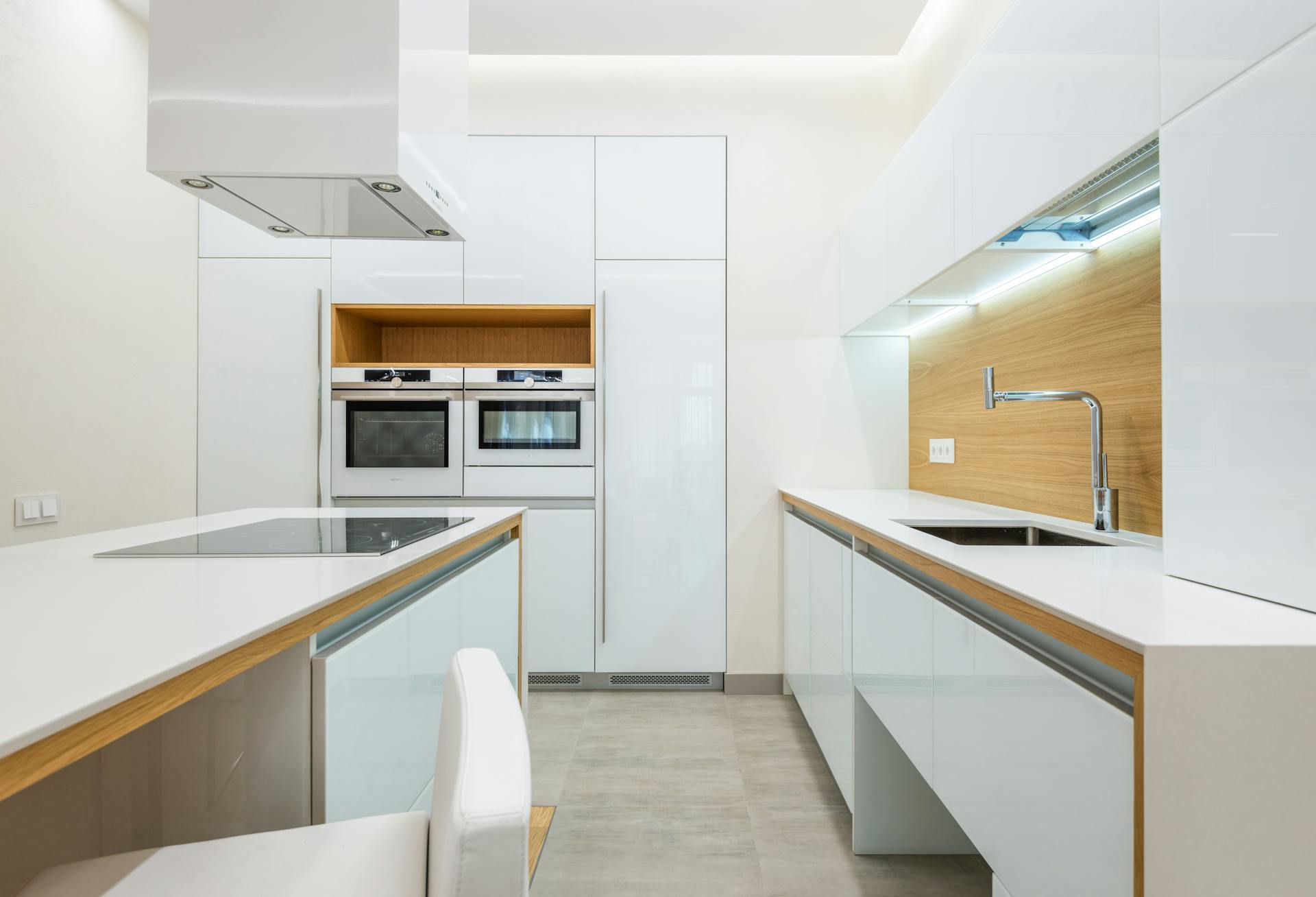
Working with the building — what 1930s semis actually need

Which Deelux ranges suit a 1930s Warrington semi

Not every range suits a pre-war semi. High-gloss modern cabinets can look uncomfortable in a house built in 1935 with picture rails and quarry tiles; heavy in-frame cabinets can overwhelm a small rear kitchen. The match between cabinet style and period matters more than most homeowners realise.

For traditional Warrington 1930s semis — period features intact

These are our usual recommendations:

  • Mollingdon (painted Shaker, from £11,000) — the default choice for most Warrington 1930s semi kitchens. Understated, character-appropriate, works with picture rails and original joinery.
  • Brackenbury Oak & Painted (from £13,000) — oak element echoes original doors and architraves; painted element softens the scheme. Good for families who want visible timber without going full farmhouse.
  • Falconbrook In-Frame (from £14,000) — when budget allows and the kitchen is large enough; in-frame construction sits beautifully alongside 1930s detailing.

For 1930s semis extended into contemporary kitchen-diners

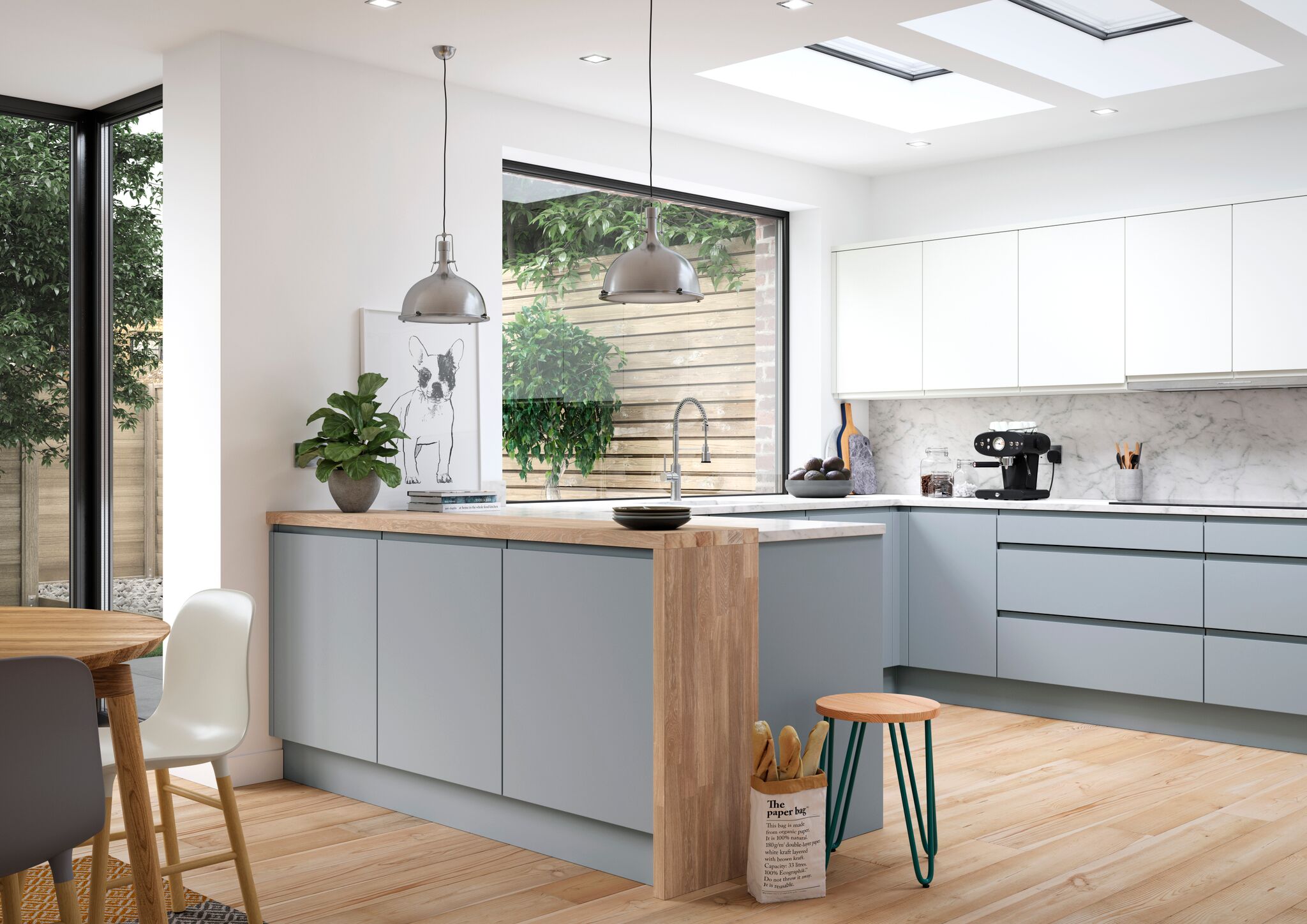
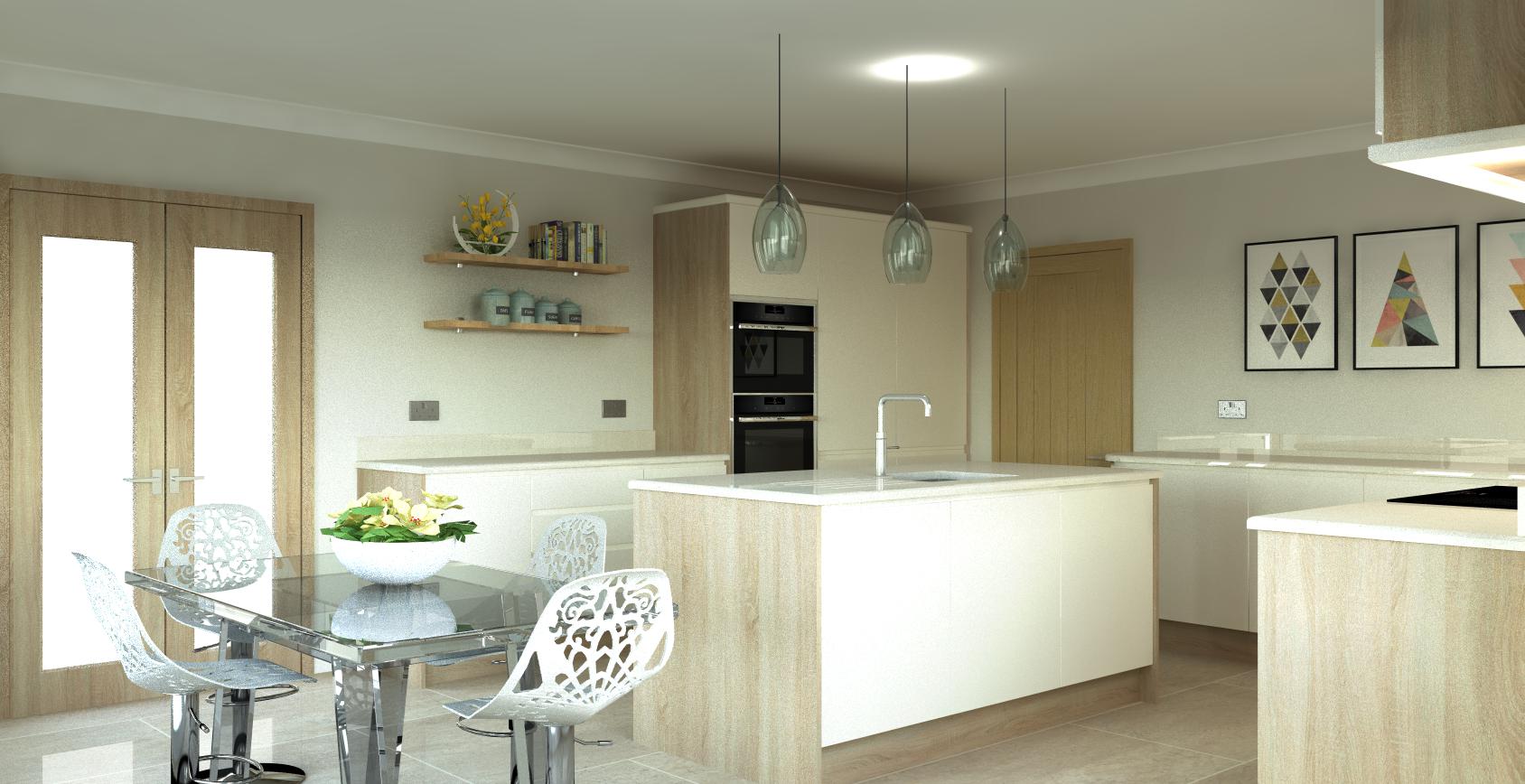
A modern rear extension changes the brief. The new space is bright, open, garden-facing — and a traditional painted Shaker can start to feel mismatched with bifolds and a rooflight. Options:

  • Pollino (modern matt, from £8,500) — quieter modern tone that bridges period house with modern extension
  • Sensia (modern matt, from £9,500) — even more tactile and quiet; great with stone floors and warm timber
  • Pollino True Handleless (from £11,500) — best for extensions where the client wants a distinctly contemporary kitchen inside a 1930s envelope

Mixed-era homes (original semi + modern extension)

Keep the cabinetry consistent throughout — don’t put painted Shaker in the original footprint and modern gloss in the extension. Pick one range and one finish and let the architecture supply the contrast.

Honest caveat: no range suits every 1930s semi, and the right answer depends on the room, the condition and the family — not just the decade. At the free design visit we bring samples of the three or four ranges we think suit, not all eight. Book a home visit or drop into the Warrington showroom on Chapel Lane, Stockton Heath.

Which Deelux ranges suit a 1930s Warrington semi

Frequently asked questions

Do I need special planning permission for a kitchen in a 1930s Warrington semi?

Not for the kitchen itself. Internal kitchen refits don’t need planning permission unless the property is listed or in a conservation area. A rear extension may need planning — see our Warrington planning permission guide.

Can Deelux fit into a 1930s semi with solid walls?

Yes — most of our Warrington work is in 1930s semis. Our fitters carry the right fixings for solid brick walls and adapt the design where a particular wall won’t take a secure fix.

Should I remove the chimney breast in my 1930s semi kitchen?

Usually no. It’s expensive, structural, and you lose the period character. A good designer absorbs the chimney breast — tall larders flanking, or a range cooker in the original fireplace recess.

Which Deelux range suits a 1930s Warrington semi best?

Mollingdon (painted Shaker) is the most popular choice for traditional 1930s semis. Brackenbury (oak and painted) works where you want some timber. For modern rear extensions, Pollino or Sensia usually suit better.

Can you match a new extension kitchen to the original 1930s part of the house?

Yes, with careful range and finish selection. Keep the cabinets consistent throughout; let the architecture supply the contrast between old and new. We’ll design the whole space at one free home visit.

Showrooms
Visit your local showroom today to discuss your new kitchen.

Unsure on the kitchen style you are looking for? Why not pop into our Chester showroom located opposite Waitrose at 102 Boughton, Chester, CH3 5BP or our Nantwich showroom near Marks & Spencer at 56 Beam Street, Nantwich, CW5 5LJ. 

Chester ShowroomNantwich ShowroomWarrington Showroom
Chat with us