Buying guide

Best kitchen layouts for 1930s semis in Warrington

Most of the semis we fit kitchens in across Warrington — Appleton, Grappenhall, Stockton Heath, Latchford, Fearnhead, Orford, Padgate — share the same 1930s bones: a bay-fronted living room, a dining room behind, a small kitchen at the back, and a modest garden beyond. The original kitchen was rarely bigger than 2.5m by 3m, designed for a housewife and a coal range, not a family of four, an induction hob and a wine fridge.

You have four realistic layout options, and the right one depends on how much of the 1930s floor plan you’re willing to rework.

The four layouts, simplest to most ambitious:

  1. Keep the rooms separate — rework the existing kitchen footprint only
  2. Knock through kitchen to dining room — create an L-shape open kitchen-diner
  3. Rear extension with existing dining room kept — full-width kitchen-diner extension
  4. Full open-plan extension with knock-through — kitchen, dining and living flowing into the garden

Budget, planning rules (your semi may fall under Warrington Borough Council’s permitted development rights — see our Warrington planning guide), and how you actually live should drive the choice.

Best kitchen layouts for 1930s semis in Warrington

Keeping the rooms separate — a new kitchen in the 1930s footprint

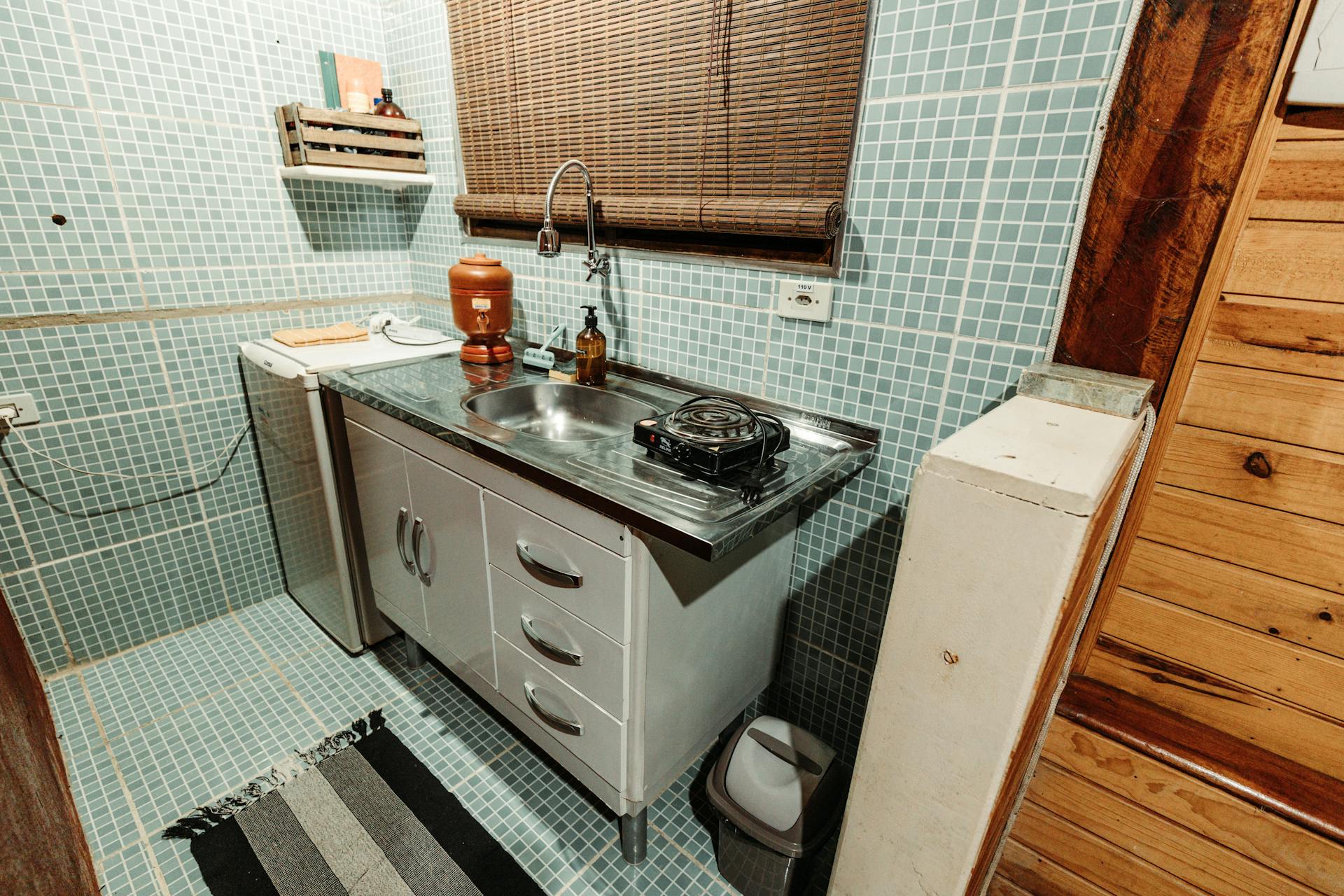
If you’re not extending or knocking through, you’re working within the original 1930s rear kitchen. Tight, but workable — and by far the cheapest option because there’s no structural work and no building regulations overhead.

Typical Warrington 1930s semi kitchen constraints:

  • 2.5m to 3m wide, 2.5m to 3.5m deep
  • Back door and window on the rear wall
  • Chimney breast in the original kitchen (back boiler was standard)
  • Under-stair cupboard stealing a corner
  • Door to the dining room on the side wall

Layouts that work within this footprint:

  • Single-run (one wall) — best for rooms under 2.5m wide, or where you want the opposite wall free for a breakfast bar. Works with our compact modern gloss Bowden range (from £7,500).
  • L-shape around the chimney breast — the most efficient use of a 1930s rear kitchen. Hob on one wall, sink on the adjacent wall, tall larders flanking the chimney. Suits Pollino (modern matt) or Mollingdon (painted Shaker).
  • Galley (two opposite walls) — needs at least 2.7m wall-to-wall. Feels tight but gives more worktop than any other layout in a small footprint.

Design tricks for a 1930s Warrington semi kitchen:

  • Full-height larder drawers store more than wall cupboards without crowding the ceiling
  • Pale matt or gloss finishes reflect limited natural light from a single rear window
  • Keep the chimney breast — a tall unit on each side absorbs it cleanly
  • Specify integrated extraction; 1930s rear kitchens aren’t designed for modern cooking smells
Keeping the rooms separate — a new kitchen in the 1930s footprint

Knocking through, extending — or both

Most Warrington semi kitchen projects now involve opening the space up. The question is how far.

Option 2: Knock through the kitchen-to-dining wall

Removes the wall between the original kitchen and dining room, creating one L-shaped kitchen-diner. The original kitchen becomes the work zone; the dining room becomes the eating and sitting zone. Cabinets run L-shaped into the corner.

  • Works well in: every 1930s Warrington semi; the dividing wall is often non-load-bearing but usually needs a steel beam if it is
  • Structural work: structural engineer required, steel beam common, Building Regulations approval
  • Planning: typically not required — internal work
  • Best range fit: Mollingdon (painted Shaker) for character, Pollino for modern matt, Sensia for quieter modern tones

Option 3: Rear extension, dining room kept separate

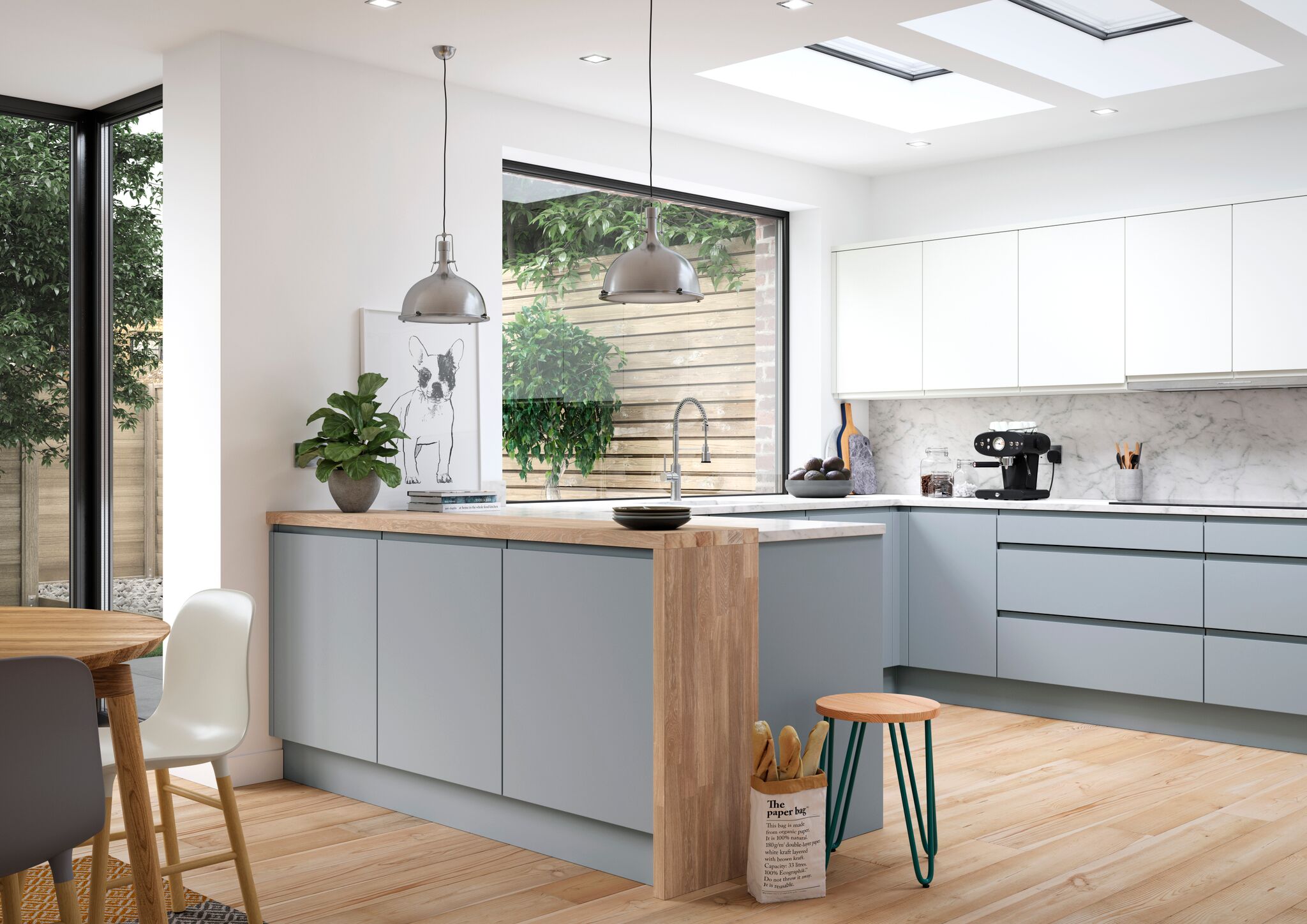
Push the rear of the house out into the garden by 3–4m, turning the original kitchen + extension into one wider kitchen with a run of bifolds or sliding doors to the garden. The dining room stays as a formal dining room or snug.

  • Works well in: semis with deeper gardens — common in Grappenhall, Appleton, Stockton Heath and Culcheth
  • Planning: often permitted development up to 3m under Warrington Borough PD rules (see our Warrington planning permission guide)
  • Best range fit: any Deelux range — this layout gives you the widest choice

Option 4: Full open-plan — knock-through plus rear extension

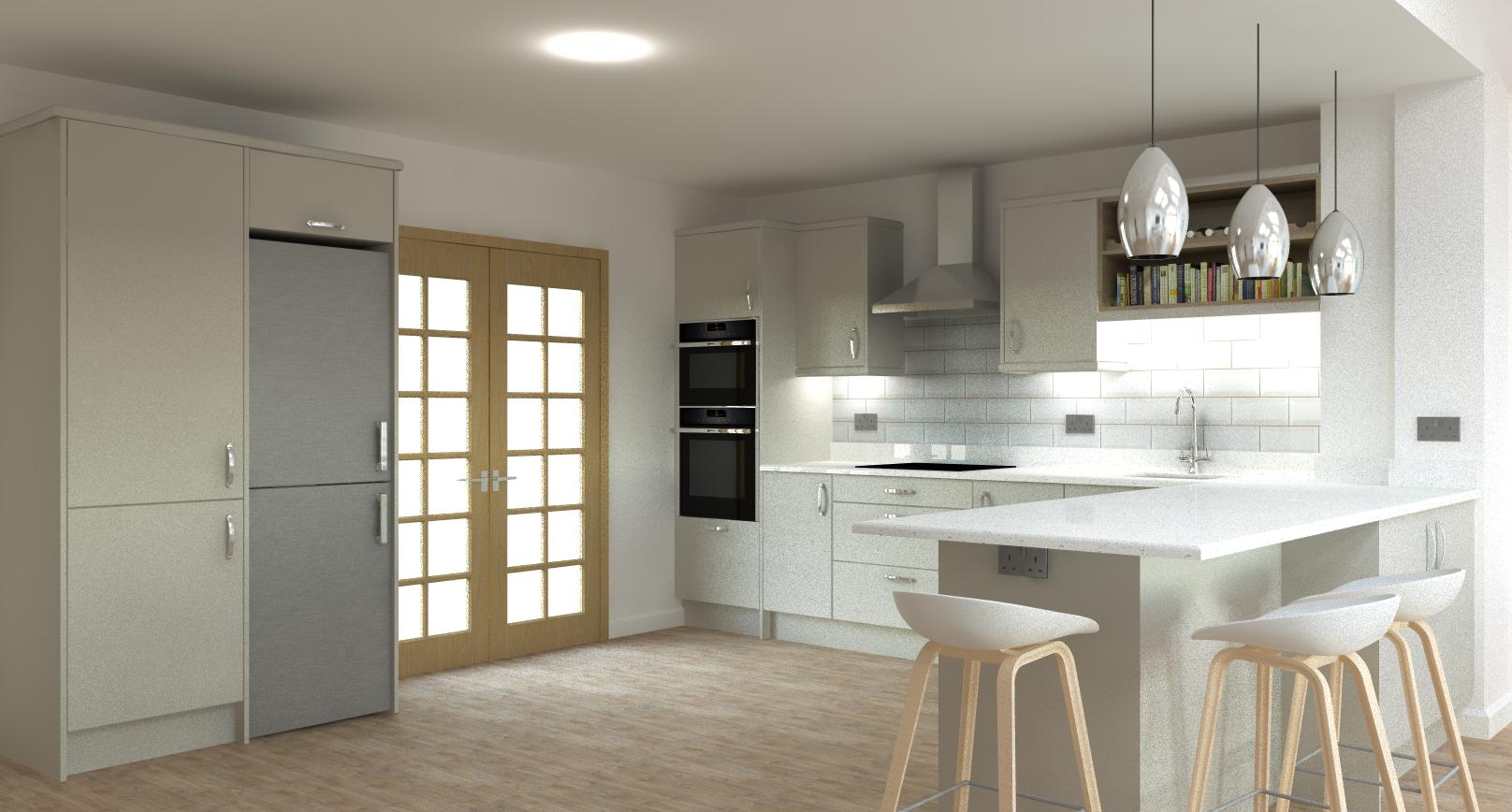
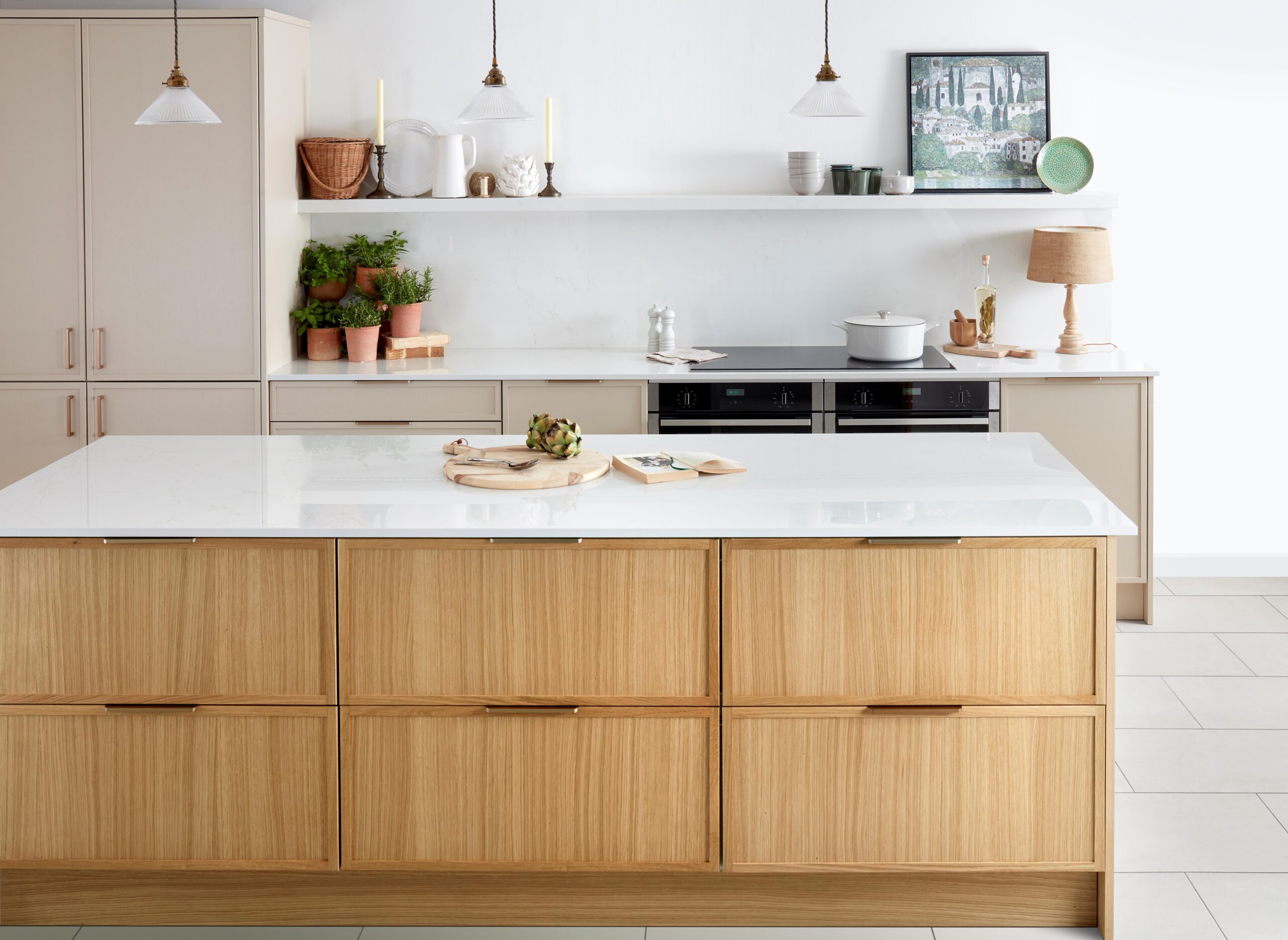
The ambitious version. Knock through kitchen + dining, plus rear extension. You end up with one large open-plan kitchen-dining-sitting room spanning the width of the house with bifolds to the garden and a central island.

  • Works well in: larger Warrington semis and end-of-terraces with wider plots
  • Island size: 1.8–2.4m is typical; bigger than that and walkways pinch in a semi footprint
  • Best range fit: all Deelux ranges; Falconbrook In-Frame and Brackenbury for larger higher-end projects

Honest caveat: an island isn’t always the right answer in a 1930s semi. Below ~16m² total kitchen floor area, a peninsula usually works better. We’ll tell you which suits your space at the free design visit. Book a home visit or drop into the Warrington showroom at Chapel Lane, Stockton Heath.

Knocking through, extending — or both

Frequently asked questions

What’s the best kitchen layout for a 1930s Warrington semi?

If you’re keeping the rooms separate: an L-shape around the chimney breast uses the 1930s rear kitchen footprint most efficiently. If you’re knocking through to the dining room: an L-shape kitchen-diner with the cabinets running around the corner. If you’re extending: a galley or L-shape kitchen-diner with bifolds to the garden.

How wide does a Warrington semi kitchen need to be for an island?

At least 3.5–4m internal width to give 900–1000mm walkways either side. Below that, a peninsula is a better fit.

Can I remove the chimney breast in my 1930s semi kitchen?

Yes, but it’s a structural job — structural engineer, Building Regulations, usually a steel beam. Often cheaper and more characterful to design around it with tall larders flanking.

Is the wall between my kitchen and dining room load-bearing?

In a 1930s semi, it often is — but not always. A structural engineer can tell you in a 30-minute visit. Never assume.

Which Deelux range works best in a Warrington semi?

Mollingdon (painted Shaker) is the most popular for traditional 1930s semis; Pollino and Sensia suit homeowners who want a cleaner modern look in the same footprint.

Interior Design Service
We are on hand to help you choose wall colours, fabrics, flooring and much more.

Are you thinking of having an extension? Bring in your architect's plans and we can begin to design your dream kitchen.  We can undertake as much of the project as you like from supplying and installing to fully project managing your kitchen. Get in touch today to start your kitchen adventure with Deelux. 

Design Service
Chat with us